Nano-therapeutics Targeting Cholesterol Efflux Transporter in Macrophages for Cancer Immunotherapy
NU 2025-160
INVENTORS
- Jason Miska*
- Feinberg School of Medicine, Department of Neurological Surgery
- Peng Zhang*
- Feinberg School of Medicine, Department of Neurological Surgery
SHORT DESCRIPTION
Novel nanoparticle technology that modulates macrophage cholesterol metabolism to boost anti-tumor immunity in GBM.
BACKGROUND
Glioblastoma (GBM) is the most aggressive primary brain tumor in adults, and effective treatment options are severely limited. Current therapies deliver only modest survival benefits largely due to a profoundly immunosuppressive tumor microenvironment characterized by the predominance of tumor-associated macrophages (TAMs), which are a key driver of immunosuppression and therapy resistance. Cholesterol acts as a critical regulator of macrophage function, with high intracellular cholesterol levels triggering polarization toward a pro-inflammatory phenotype, while lower levels or efficient cholesterol efflux can promote polarization toward an anti-inflammatory phenotype. Moreover, GBM cells rely heavily on cholesterol, reprogramming their metabolism to import and accumulate massive amounts of it to support rapid cell membrane synthesis, proliferation, and survival. Modulating cholesterol efflux in TAMs has been shown to reprogram TAMs to achieve enhanced antigen presentation, increased production of pro-inflammatory cytokines, and significantly improved therapeutic outcomes in glioma models, especially when combined with radiation therapy and/or anti-PD-1 therapy. Therefore, targeting cholesterol efflux in TAMs has the potential to enhance anti-tumor immunity while simultaneously starving the tumor of essential nutrients, and represents a novel and promising approach in the treatment of GBM that is desperately needed.
ABSTRACT
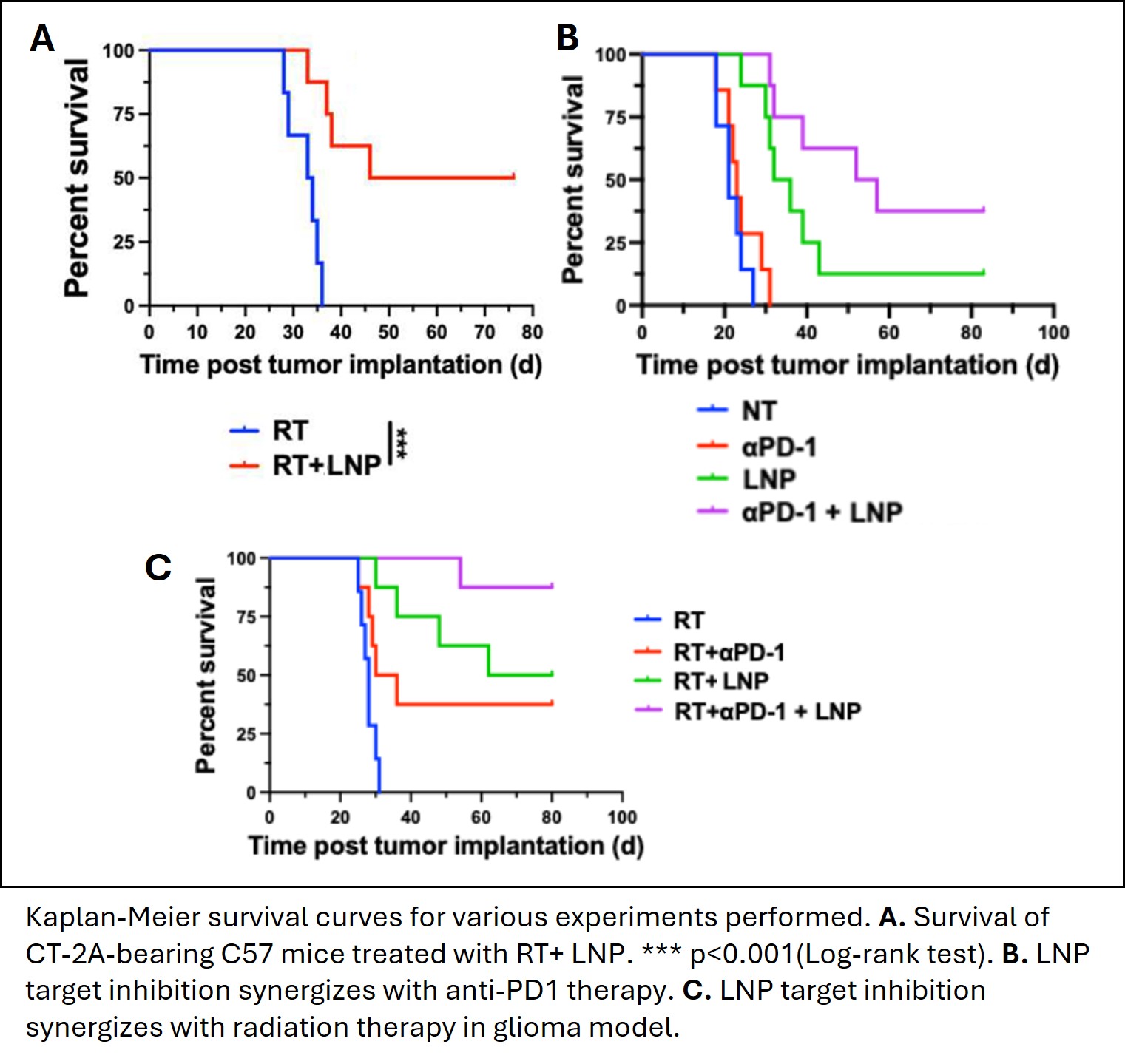 Northwestern researchers have developed a nanoparticle-based therapeutic strategy designed to inhibit cholesterol efflux in TAMs. This approach directs lipid nanoparticles to target these macrophages and inhibit their cholesterol efflux, leading to cholesterol accumulation and a switch toward a pro-inflammatory phenotype. In preclinical GBM models, this treatment reprogrammed TAMs and enhanced T cell-mediated anti-tumor responses, resulting in enhanced survival. This work establishes a new immunometabolic strategy with strong translational potential in overcoming GBM therapy resistance and delivering improved clinical outcomes.
DEVELOPMENT STAGE
TRL-5 Prototype Validated in Relevant Environment: The therapy has demonstrated efficacy in preclinical GBM models, confirming key functions in a relevant in vivo setting.
APPLICATIONS
- Glioblastoma treatment: Enhances anti-tumor immunity in aggressive brain tumors.
- Targeted inhibition: Inhibits key cholesterol transporters in macrophages.
- Cancer immunotherapy: Reprograms immunosuppressive tumor environments
ADVANTAGES
- Novel target altering immunometabolism.
- Targeted delivery: Leverages functionalized lipid nanoparticles for precision therapy.
- Enhances immune response: Reprograms TAMs to a pro-inflammatory phenotype.
- Dual therapeutic effect: Reduces tumor support by inhibiting cholesterol efflux that fuels tumor cell survival.
- Improved survival: Shows strong efficacy in preclinical GBM models.
- Synergy with other therapeutic modalities: Improved outcomes when combined with radiation and/or immunotherapy
PUBLICATIONS
IP STATUS
US Patent Pending.
CATEGORY/INDUSTRY PIPELINE
 Therapeutics
KEYWORDS
Cancer, oncology, nanotherapeutics, cholesterol efflux, macrophages, TAMs, glioblastoma, GBM, immunometabolism, immunotherapy, immune reprogramming, immunomodulation, lipid nanoparticles, LNP, targeted therapeutic
Patent Information:
| Title |
App Type |
Country |
Serial No. |
Patent No. |
File Date |
Issued Date |
Expire Date |
Categories:
Life Sciences > Therapeutics
Keywords:
Adjunct therapy
BIO2026
Brain cancer
Cancer/Oncology
CNS - Central Nervous System
Drug delivery
Immunotherapy
Nanoparticle
Neurologic disease
Nucleic Acids
RNA - Ribonucleic Acid
Therapeutics