SEC61 Complex as a Novel Therapeutic Target to Enhance Immunotherapy Response in Glioblastoma
NU 2023-011
INVENTORS
- Irina Balyasnikova*
- Northwestern University Feinberg School of Medicine, Department of Neurological Surgery
- Joseph Duffy
SHORT DESCRIPTION
A targeted therapeutic approach that inhibits the SEC61 complex to enhance responses to immunotherapy in glioblastoma.
BACKGROUND
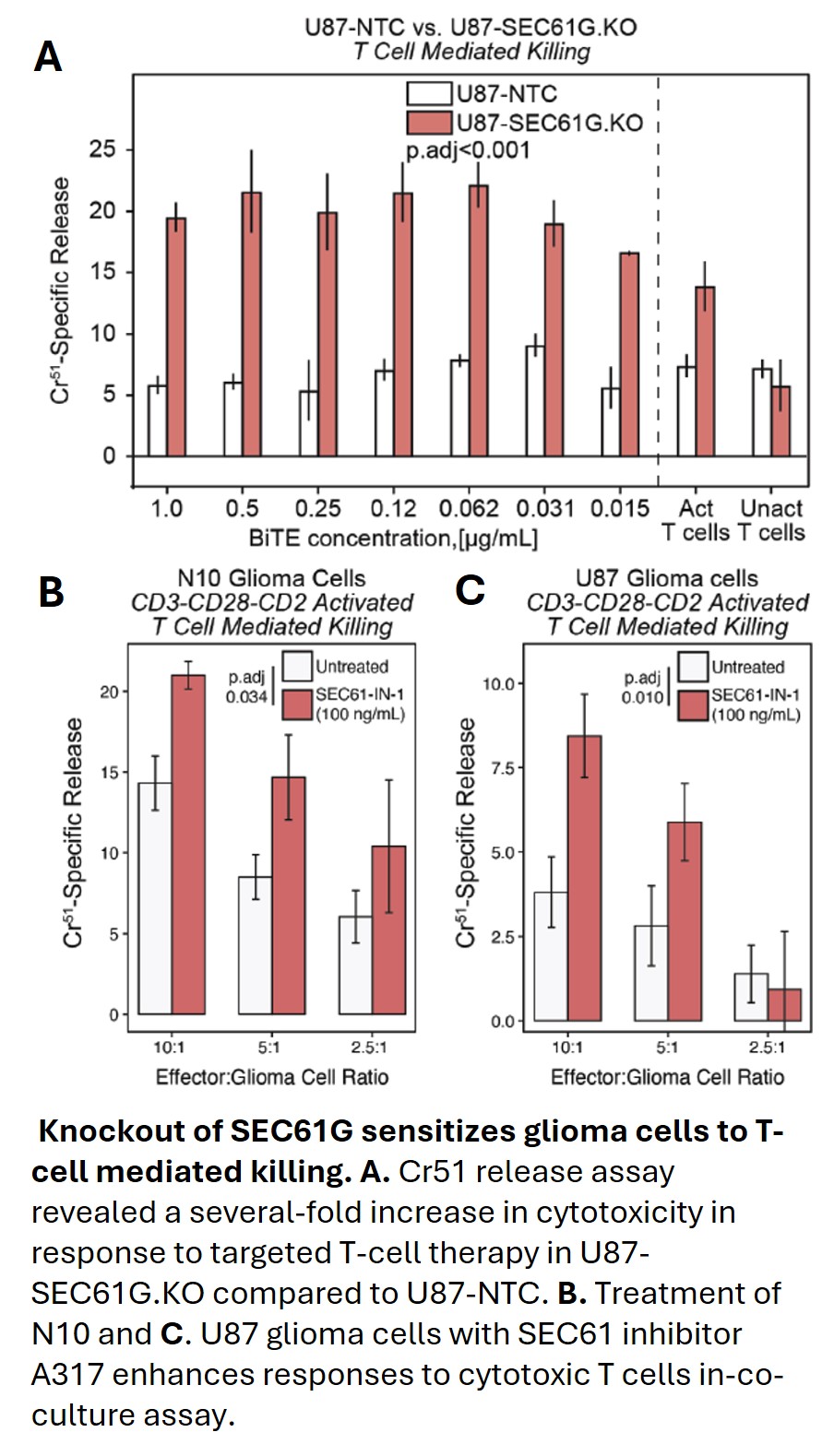 Glioblastoma (GBM) is the most aggressive primary brain tumor in adults, and effective treatment options are severely limited. Current therapies, including surgery, radiation, and temozolomide, deliver only modest survival benefits largely due to a profoundly immunosuppressive tumor microenvironment. Moreover, while immunotherapy has delivered promising results with other types of cancer, it has not yet delivered clinical benefits for GBM due to tumor resistance. There is a pressing need for improved treatment methods that can overcome these barriers.
ABSTRACT
Northwestern researchers have conducted an unbiased, genome-wide CRISPR knockout screen to identify genes that contribute to immunotherapeutic resistance in glioblastoma in the context of bispecific T-cell engager (BiTE) therapy. They found that inactivating SEC61G in vitro in glioma cell lines increases T-cell mediated cytotoxicity and upregulates MAPK pathway activation. Additionally, treatment of N10 and U87 glioma cells with SEC61 inhibitor enhances responses to cytotoxic T cells in co-culture assays. Furthermore, transcriptomic analysis confirmed that SEC61G is overexpressed and genomically amplified in a substantial portion of GBM patient samples. These findings indicate that targeting the SEC61 complex can enhance the efficacy of immunotherapy for glioblastoma.
DEVELOPMENT STAGE
TRL-3 – Experimental Proof-of-Concept: Key functions have been validated in vitro using CRISPR knockout models in glioma cell lines to enhance T-cell therapy response.
APPLICATIONS
- Improved immunotherapy for glioblastoma: Enhances patient response to targeted T-cell therapy.
- Gene-targeted therapy: Facilitates combination approaches with MAPK inhibitors.
- Personalized treatment strategies: Enables tailored interventions based on tumor gene expression.
ADVANTAGES
- Enhances immunotherapy response: Boosts T-cell efficacy by modulating MAPK pathway activity.
- Overcomes tumor resistance: Disrupts a key component in GBM resistance mechanisms.
- Enables combinatorial treatment: Compatible with existing immunotherapeutic and targeted regimens.
- Validated approach: Demonstrated proof-of-concept with CRISPR knockout experiments.
PUBLICATIONS
IP STATUS
US Patent Pending (18/776,064)
CATEGORY/INDUSTRY PIPELINE
 Therapeutics; Biomarkers & Biomedical Research Tools
KEYWORDS
GBM, Immunotherapy, SEC61 complex, MAPK, T-cell therapy, glioblastoma, cancer, oncology, resistance
Patent Information:
| Title |
App Type |
Country |
Serial No. |
Patent No. |
File Date |
Issued Date |
Expire Date |
Categories:
Life Sciences > Therapeutics
Keywords:
BIO2026
Brain cancer
Cancer/Oncology
Immunotherapy
Targeted therapy
Therapeutics